
Smart Glasses Recording Light and What Bystanders Can Tell
What the front LED on Ray-Ban Meta glasses signals, why some visual AI requests leave it dark, and what people nearby can ask about privacy.
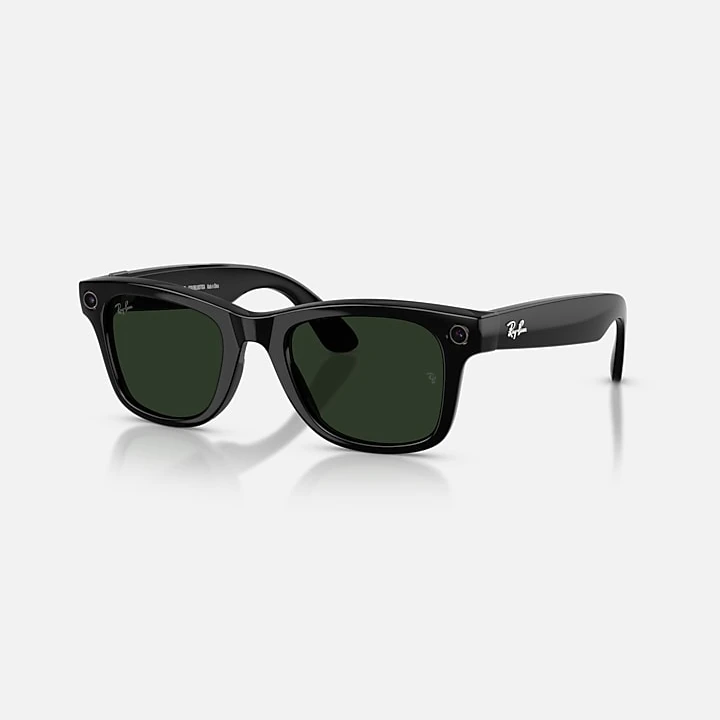
A tiny white light on the front of smart glasses can tell someone nearby that the wearer is taking a photo or video. It can also leave important questions unanswered. A photo signal may last only a moment. Some camera-based AI requests on newer Ray-Ban Meta glasses do not turn on the front light at all. The light is useful, but it covers a narrower set of actions than many people assume.
Ray-Ban Meta glasses make this distinction unusually clear because the manufacturer describes what each indicator does. This guide focuses on those glasses. Other brands need their own documentation checked before anyone treats a familiar-looking light as the same signal.
Which light can another person see?
Ray-Ban Meta glasses have a front-facing capture LED and a separate inward-facing notification LED. The front light faces other people. The inner light gives the wearer status information about power, capture, voice commands and calls. Someone across the table cannot use the inner light to work out what the glasses are doing.
According to the Ray-Ban Meta FAQ, taking a gallery photo makes the front capture LED blink. It stays active during gallery video recording. The same capture signal applies when the wearer starts a photo or video with a voice command rather than the button on the frame. The front light can also come on as the glasses start up, so a light by itself is not a complete account of what was captured.
The length of the signal matters in practice. A brief photo blink is easy to miss if you turn toward the wearer afterward. Video offers more time to notice. Even then, the light faces forward. A person to the side, behind the wearer or at a distance may have no clear view of it. These are limits of observing a small light in a real setting, rather than evidence that the wearer has changed a setting.
Does an unlit recording light mean the camera is idle?
No. Ray-Ban says newer models can use the camera for a visual AI request, such as identifying a plant or landmark, without turning on the capture LED. The company distinguishes that request from a photo or video saved to the gallery. Its FAQ also says some AI features on first-generation Ray-Ban Meta glasses do activate the LED because of hardware limitations. The meaning of an unlit light therefore depends on the model and the action.
For a visual AI question, Ray-Ban says the glasses send an image to Meta's cloud for processing. A nearby person would not learn that from the front light on the newer models described above. Nor would the light show whether the wearer has enabled voice features. The inward-facing LED has voice and call states, but it is meant for the wearer.
A visual AI request also has a different data path from a gallery photo. One answer in Ray-Ban's FAQ says AI-processed images are stored and may be used to improve or train Meta's AI. Another says images used by newer AI features are not saved in Meta AI conversation history. Those statements describe different places data might go; neither gives a bystander a way to read the current privacy settings from the light. Wearers should check the terms that apply to their model, software and region.
Can the wearer switch the capture light off?
Meta says the front capture LED has no off switch. In its 2026 explanation of the indicator, the company says second-generation glasses disable the camera when they detect that the light has been covered. Meta also says it is adding detection for physical tampering. These are descriptions of Meta's safeguards, not a way for someone nearby to verify a particular pair of glasses from across a room.
The indicator still has a useful job. If you see it activate on a Ray-Ban Meta pair, gallery capture is a reasonable concern and you can ask the wearer what they are doing. If you do not see it, you may simply have missed a brief photo signal, lacked a view of the front of the frame, or been present during a visual AI request that does not use the light. You cannot settle those possibilities by watching the LED alone.
What happens after a photo or video is taken?
Meta says gallery photos and videos are stored on the glasses until the wearer imports them to a phone. After import, the wearer can save or share them. The front LED signals capture at the time it happens. It does not announce a later import, a message to a friend, or a social post.
That gap matters when someone asks whether a recording light protects bystanders. It gives a visible cue for one stage of the process. It does not grant anyone in the scene a view of the file, a choice about later sharing, or a reliable account of an AI request. A wearer can check the current Meta AI app settings and privacy information for data controls. People nearby cannot inspect those settings from the light.
For buyers, the recording indicator is one feature to check alongside camera and microphone controls. Ray-Ban Meta (Gen 2) is an example of a camera-equipped frame with a front capture light. Even G2 takes a different approach with no camera on the frame, although it still has microphones. Our guide to the main smart-glasses designs explains how camera, display, audio and phone dependence vary across products. You can also browse the wearable-assistants category for current listings.
A better conversation than watching the frame
If you wear camera-equipped glasses, ask before photographing or filming people. Meta's responsible-use guidance asks wearers to seek permission and avoid sensitive places or settings where people expect privacy. In a meeting, clinic, changing area or private home, putting the glasses away may be clearer than asking others to trust an indicator they cannot always see.
If you are nearby and concerned, ask whether the wearer is taking a gallery photo or video, using visual AI, or leaving the camera unused. A no-recording rule should be stated plainly to everyone in the space. It should not depend on whether someone notices a small light.