
AI Note Takers Compared for Meetings and Everyday Memory
Compare PLAUD Note, Plaud NotePin, Anker soundcore Work, Omi AI Pendant, Limitless Pendant and friend by capture style, transcription, ongoing cost and privacy.
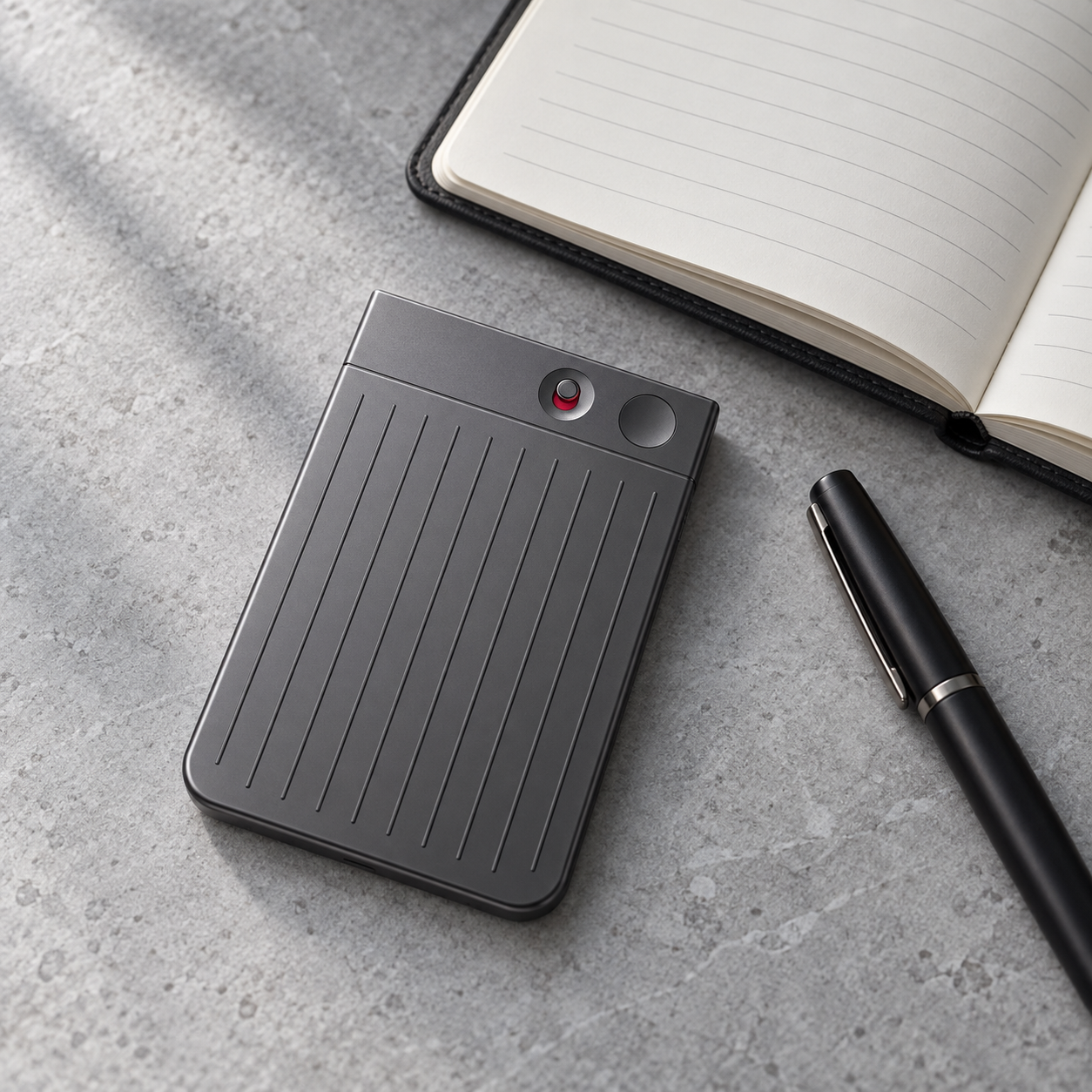
A note taker proves useful after a conversation ends. You need to find the decision, name or promise later without adding another file to a growing list of recordings.
We compared the current listings for PLAUD Note, Plaud NotePin, Anker soundcore Work, Omi AI Pendant, Limitless Pendant and friend. They all capture speech or preserve memories from conversations, but their workflows differ. Some start with a physical record button. Others are designed to stay with you through the day. One is no longer available to new buyers. One is an AI companion first and a meeting recorder second.
This guide uses the product details available on September 22, 2026. Prices, plans, languages and availability can change. It is a buying guide based on listed information, not a hands-on accuracy test.
Start with the moment you need to capture
PLAUD Note suits a person who knows when a recording should begin. It is a card-sized device with a physical mode switch for in-person and phone-call recording. The current listing describes 64 GB of local storage, up to 30 hours of continuous recording and a magnetic case that attaches to the back of a phone. That form works well when a meeting, interview or call has a clear start and end.
Plaud NotePin moves the same general workflow onto a wearable device. Its current listing describes one-press capture, two microphones, 64 GB of storage and up to 20 hours of continuous recording. The difference is practical. A wearable is easier to keep on during a walk, a client visit or a day with several short conversations. A card recorder is easier to place beside a notebook or attach to a phone for a call.
Anker soundcore Work is another wearable option, built around one-press capture and a small charging case. The listing describes 8 GB and 64 GB variants, local recording when unpaired, and up to eight hours of continuous offline recording from the recorder. It is a sensible fit when you want to decide when a conversation becomes a note, then return to it in the app later.
Omi AI Pendant starts from a different habit. It is designed for hands-free, ongoing conversation capture, then turns that material into summaries, tasks, memories and a daily recap. Its current page says it can record offline and sync later, with on-phone transcription and cloud features available through its app. That can suit someone who wants a broad personal memory layer. Set clear rules for which places, people and conversations belong in that layer before recording begins.
friend belongs at the edge of this comparison. It is a necklace-worn AI companion that listens while paired to an iPhone, replies by voice or text, and keeps memories for 30 days on its free plan. It can help with personal recall, but its product design is centered on companionship rather than a reliable record of a formal meeting. Someone choosing a device for decisions, action items or client notes should treat it as a different category.
Limitless Pendant shows why availability has to be part of a comparison. Its current page says new sales ended on December 5, 2025. Existing customers retain access through 2026, but it is not a new-purchase recommendation. It is included as a reminder that a device relying on cloud search, syncing and summaries needs an exit plan before you buy it.
Meetings and phone calls need a deliberate workflow
For a scheduled meeting, a device with an obvious recording action reduces uncertainty. PLAUD Note has a dedicated in-person and phone-call mode. soundcore Work uses one-press recording. NotePin also begins with a deliberate press, even though it is designed to stay wearable. These choices make it easier to explain to other people when you are recording and to keep unrelated conversations out of the file.
The phone-call requirement changes the short list. PLAUD Note is the clearest match in this group when phone calls are central because its listing describes a physical phone-call mode and a vibration-conduction sensor used while the device is attached to a phone. A wearable pendant can still capture a conversation around you, but that is not the same thing as a purpose-built call-recording workflow.
Every device here needs a companion service for its useful AI layer. Local recording gives you an audio file. Transcription, speaker labels, summaries, search and web access often arrive after the device connects to a phone, app or cloud service. When a meeting matters, test the complete path during the return period. Record a representative conversation with consent, wait for the transcription, then check names, figures, decisions and action items before you depend on it.
Everyday memory favors a different tradeoff
Daily memory tools make sense when you frequently lose small details across many conversations. The tradeoff is that the device may collect more personal context than a meeting recorder. Omi is built around ongoing capture, task extraction and a searchable memory system. friend keeps a shorter personal memory window unless you add its optional subscription. Limitless was built around continuous capture too, although its sales status removes it from a current buying shortlist.
Continuous capture puts more people and places into your records. A person who records only a planned meeting can decide before pressing a button. A device that follows daily life needs rules for family time, shared workspaces, medical conversations and private calls. Check the device controls, deletion options, account settings and local recording laws before you make continuous capture part of your routine. Workplace policy may impose stricter limits than local law.
Transcription minutes change the real price
The hardware price is only the first number. Current listed prices put PLAUD Note at $159 and Plaud NotePin at $110.99 on sale. soundcore Work lists $159 for its 8 GB model and $169.99 for its 64 GB model. Omi lists $129 as a limited-time price, while friend lists $249. Those figures help with a first purchase decision. They do not tell you how much transcription you will need in a normal month.
PLAUD Note and NotePin both list a free Starter allowance of 300 transcription minutes each month. soundcore Work lists the same 300-minute Starter allowance. That is five hours of transcription. It may cover a handful of short interviews or a light meeting schedule. It will not cover several hours of calls every workday.
Their paid plans also differ. PLAUD Note lists a 1,200-minute Pro tier and an Unlimited tier with a daily transcription cap. NotePin lists Pro, Unlimited and Team plans. soundcore Work lists a 1,200-minute Pro tier and an Unlimited annual option. Omi lists unlimited on-phone transcription alongside 300 cloud minutes on its free plan, plus an optional Unlimited Cloud plan from $19 per month. friend lists an optional $9.99 monthly memory plan for indefinite retention.
Count your real audio before choosing a plan. Add the length of the meetings, calls or voice notes you expect to keep in an ordinary month. Then check whether imports, retries, summaries and speaker labels count against the allowance. A plan that looks generous beside the device price can become the main cost once recording becomes routine.
Phone, cloud and privacy requirements deserve equal weight
All six products rely on software beyond the hardware itself. PLAUD Note uses the Plaud app for transfers, transcription and summaries. NotePin uses Plaud app, web and desktop services, with cloud processing involved in its AI features. soundcore Work can record locally when unpaired, but its listed transcription, sync, Ask AI and browser tools require internet or cloud access. Omi pairs with iPhone or Android and offers local and cloud paths. friend requires an iPhone, Bluetooth pairing and an internet connection for its live companion experience. Limitless requires internet for syncing, lifelogs and Ask AI.
The product pages can help you narrow that down. Open the full listing before buying and look for the storage location, account requirement, export controls, deletion path and the behavior when the connection disappears. The recorders and productivity category is a useful place to continue that research across the directory.
Which device fits each job
Choose PLAUD Note when scheduled meetings and phone calls are the priority. Its physical form, explicit recording modes and listed phone attachment make the workflow easy to define.
Choose Plaud NotePin when you want a wearable recorder for in-person conversations, walks and frequent short captures, while keeping the Plaud transcription and summary workflow.
Choose Anker soundcore Work when a one-press wearable recorder, local capture and soundcore app workflow fit the way you already take notes.
Choose Omi AI Pendant when you want ongoing personal recall, app integrations and a choice between on-phone and cloud features. Set your recording boundaries before making it part of daily life.
Treat friend as a personal companion with memory features, not a substitute for a deliberate meeting record. Its iPhone requirement and 30-day free memory window matter before you choose it for work.
Do not choose Limitless Pendant as a new purchase. Use its current status as a reminder to check what remains usable, exportable and supported if a cloud-dependent device leaves the market.
Before you press record
Ask permission when a conversation can identify other people. Check workplace policy, local rules and the expectations of everyone in the room. Then decide how long you need the recording, transcript and summary to remain available. A good note taker gives you a usable record while keeping that record within boundaries you can explain.
For current pricing, specifications and source links, open the individual product pages above or browse AI note-taking devices.